Pediatric Plastic Surgery✦ in Pune
(Cleft Lip Cheiloplasty, Cleft Palate & Congenital Anomaly Repair)
Cleft Lip Cheiloplasty, Cleft Palate Palatoplasty & Congenital Anomaly Reconstruction
Cleft lip, cleft palate, and congenital hand or ear anomalies present unique challenges that affect an infant’s feeding, facial appearance, dental development, and future speech. Caring for these little patients requires not only surgical mastery of delicate pediatric anatomy but also compassionate, family-centered guidance. Dr. Chintan Gujarathi brings comprehensive pediatric reconstructive training to restore balanced facial symmetry and clear, intelligible speech.
Operated by Dr. Chintan Gujarathi (MCh Plastic Surgery, Tata Memorial Hospital Fellow) at accredited tertiary centers (Ruby Hall Clinic, Sassoon Rd & Manipal Hospital Kharadi), utilizing sub-millimeter precision, concealed micro-incisions, and advanced tissue-handling for natural, permanent outcomes.
3-6 Mo — Cleft Lip Repair
Rule of 10s guideline
9-12 Mo — Cleft Palate Repair
Prior to first words
100% — Sphincter Restoration
Oral muscle continuity
0 Scars — Hidden Palate Cuts
Internal mucosal flaps
Surgical Approaches & Precision Techniques✦
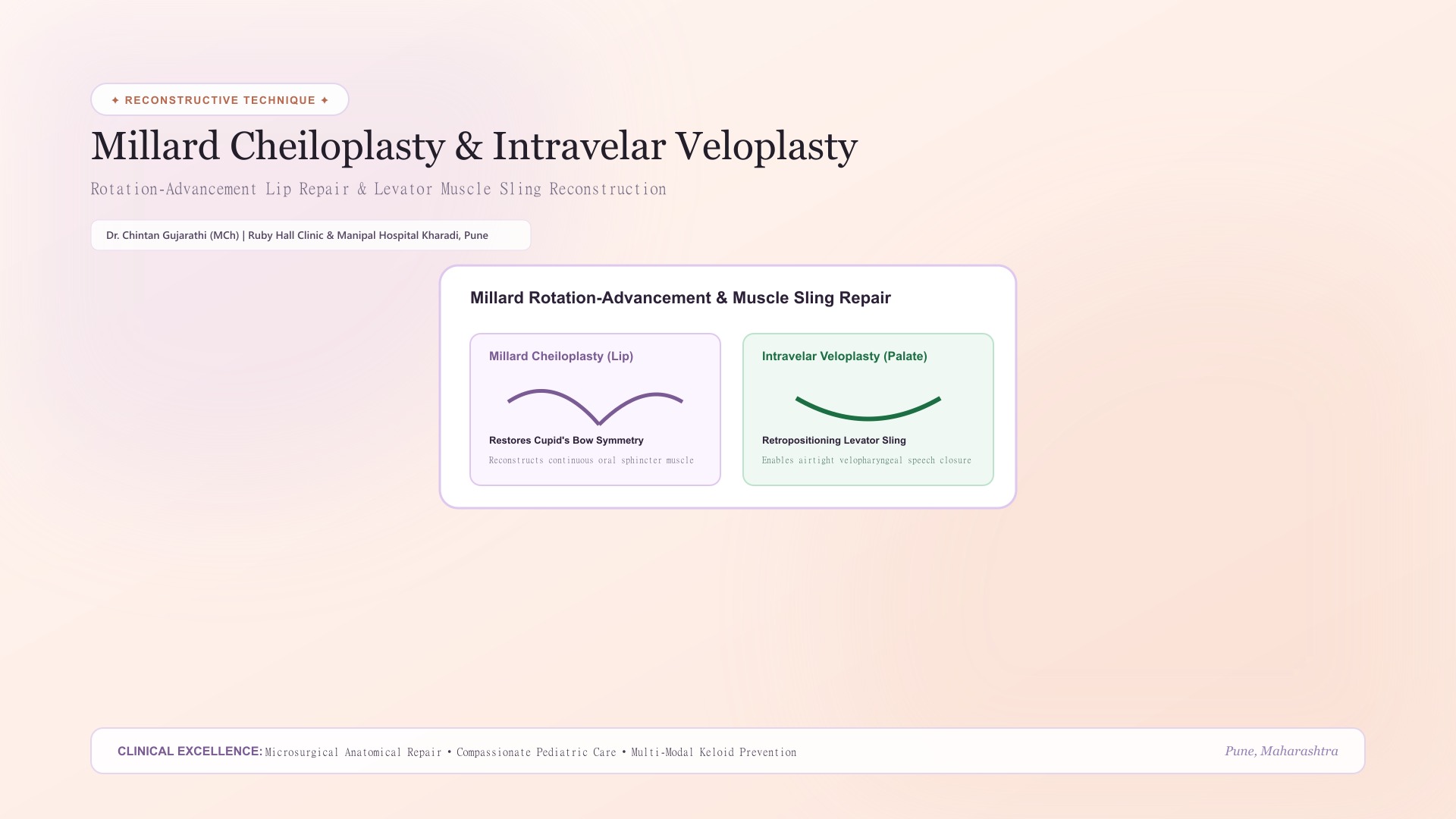
Millard Rotation-Advancement Cleft Lip Repair (Cheiloplasty)
Primary surgical repair performed at 3–6 months restoring symmetrical Cupid’s bow contour, philtral columns, and nasal alar cartilages.

Your Healing Journey & Care Guide✦
A straightforward clinical guide to what to expect and how to care for your results.
Hospital Observation & Gentle Feeding
The baby recovers in a peaceful pediatric room with mother. Specialized bottle or syringe feeding starts within hours.
Soft elbow splints are gentle and essential: they keep tiny fingers away from the delicate lip stitches for the first 10 days.
First Clinic Review & Suture Line Care
Swelling diminishes rapidly. Stitches begin dissolving or are painlessly removed. The lip line looks symmetrical and clean.
Applying prescribed antibiotic ointment to the lip seam after every feeding keeps the healing line soft and supple.
Normal Infant Routine & Scar Therapy
The baby smiles and feeds completely normally. Gentle scar massage with medical silicone gel begins.
Daily 2-minute gentle silicone massage flattens the healing incision line and keeps the lip soft and flexible.
Flawless Facial Growth & Speech Milestones
The surgical line fades into a faint, natural philtral line. Normal vocal babbling, laughing, and first words develop effortlessly.
Children who have palatoplasty before age 1 develop normal intelligible speech indistinguishable from their peers.
Recommended Best Practices (Do's)
- Feed your baby using prescribed soft bottle nipples, syringes, or spoons strictly as instructed by Dr. Gujarathi’s nursing team.
- Keep soft fabric elbow immobilizers on your baby’s arms for the first 7 to 10 days to prevent rubbing or scratching the lip.
- Clean the lip suture line gently with a sterile cotton swab soaked in warm saline after every feeding.
- Apply the prescribed antibiotic ointment or silicone gel along the lip repair line twice daily.
- Attend your scheduled follow-up visits at Ruby Hall Clinic or Manipal Hospital Kharadi.
Precautions & Safeguards (Don'ts)
- Do not give hard pacifiers, plastic spoons, or sharp toys into your baby’s mouth following cleft palate surgery.
- Do not allow other young siblings to play roughly or bump into the infant’s operated face.
- Do not expose the healing lip scar to harsh outdoor sunlight; keep baby under stroller canopies or hats.
- Do not pick or forcefully peel dried milk crusts along the fresh suture line.
- Do not miss scheduled speech and pediatric developmental evaluations.
Frequently Asked Questions✦
Essential clinical answers on surgical safety, scars, and recovery in Pune.
Schedule Your Consultation with Dr. Chintan Gujarathi
Available for personal clinical consultations and surgical assessment at premier accredited tertiary hospitals in Pune: