Chronic Wound Care✦ in Pune
(Diabetic Foot Ulcers, Bed Sores & VAC Negative-Pressure Therapy)
Surgical Debridement, Negative-Pressure Wound Therapy (NPWT/VAC) & Vascularized Flap Coverage
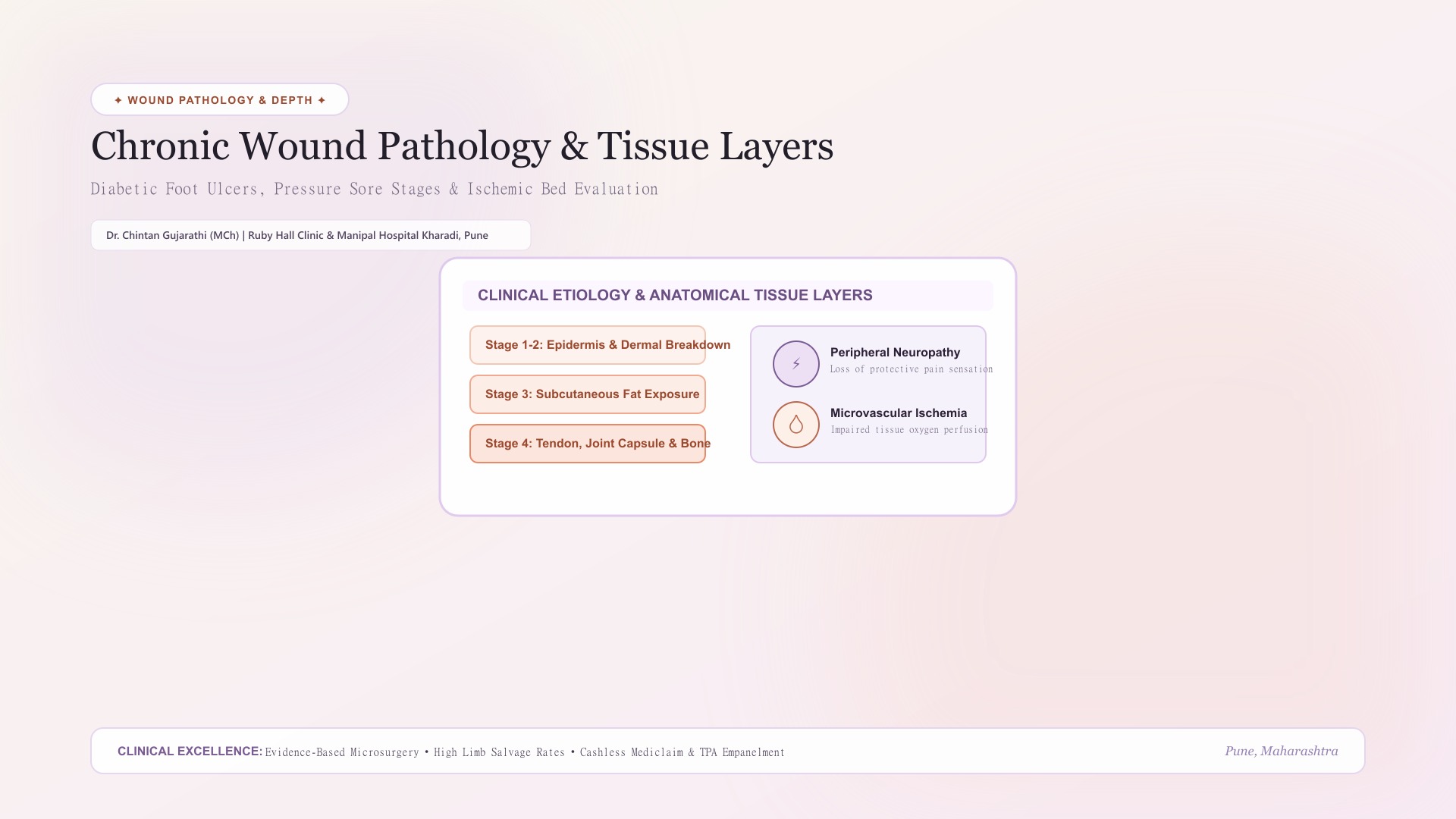
Chronic, non-healing wounds—including diabetic foot ulcers, sacral pressure sores (bedsores), venous stasis ulcers, and non-healing surgical breakdowns—impose an immense physical and emotional burden on patients and their families. Without aggressive specialized plastic surgery intervention, minor ulcers can progress to deep osteomyelitis, systemic sepsis, and avoidable limb amputations. Dr. Chintan Gujarathi offers advanced wound bed preparation, negative-pressure technology, and vascularized flap coverage to achieve durable, permanent healing.
Operated by Dr. Chintan Gujarathi (MCh Plastic Surgery, Tata Memorial Hospital Fellow) at accredited tertiary centers (Ruby Hall Clinic, Sassoon Rd & Manipal Hospital Kharadi), utilizing sub-millimeter precision, concealed micro-incisions, and advanced tissue-handling for natural, permanent outcomes.
96.8% — Limb Salvage
Amputation avoided
-125mmHg — NPWT / VAC
Accelerated granulation
100% — Vascular Cover
Durable flap padding
2-4 Wks — Wound Bed Prep
Biofilm eradication
Surgical Approaches & Precision Techniques✦
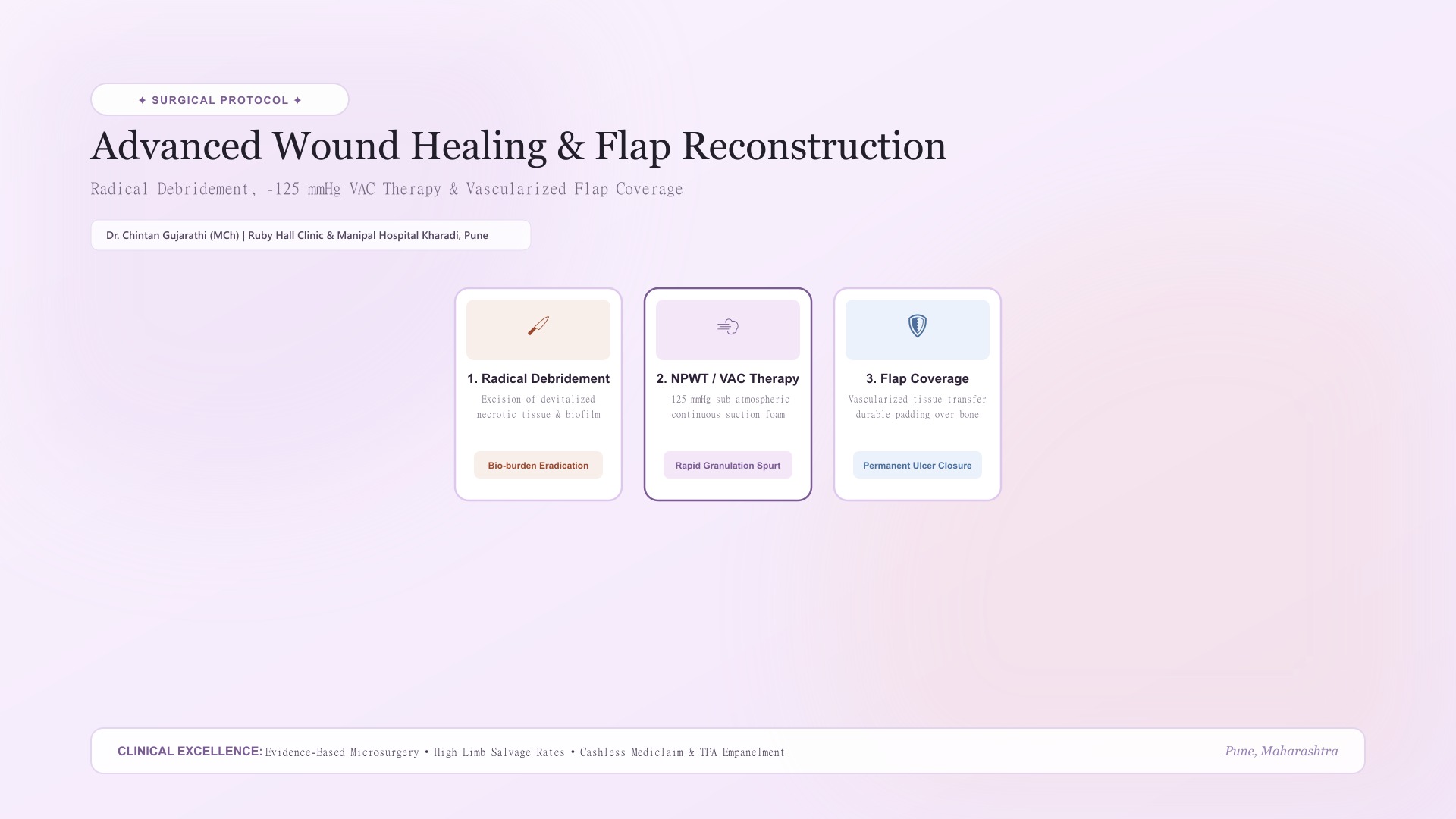
Radical Surgical Debridement & Biofilm Eradication
Excision of all devitalized, infected tissue, slough, and bacterial biofilm to convert a stagnant chronic ulcer into an acutely healing wound.
Your Healing Journey & Care Guide✦
A straightforward clinical guide to what to expect and how to care for your results.
Exudate Control & VAC Management
Continuous negative pressure draws out exudate and collapses dead space. Pain is minimal and well-controlled with oral analgesics.
Strict blood sugar control (fasting <130 mg/dL) is critical because hyperglycemia impairs white blood cell bacterial killing.
First Dressing Change & Granulation Surge
VAC sponge is changed every 48 to 72 hours. Healthy red granulation tissue rapidly replaces pale, stagnant wound base.
Do not allow anyone to walk on the operated foot or put pressure on newly rotated bedsore flaps.
Epithelialization & Total Contact Offloading
Ulcer surface completely closes or grafts consolidate. Surgical drains are removed and flap swelling subsides.
Total contact casting distributes weight across the entire lower leg, relieving 100% of pressure from the operated forefoot.
Permanent Healing & Specialized Footwear
The ulcer site is fully closed with durable, thick skin. Patients transition to custom diabetic footwear with molded insoles.
Never walk barefoot, even at home on carpet or tile; custom cushioned footwear prevents ulcer recurrence.
Recommended Best Practices (Do's)
- Strictly offload the operated wound or flap by using prescribed wheelchairs, crutches, or specialized offloading boots.
- Keep your blood sugar strictly controlled with your diabetologist, maintaining fasting levels below 130 mg/dL.
- Inspect your feet and surgical flap twice daily using a handheld mirror for any new redness, blisters, or calluses.
- Ensure the VAC therapy machine maintains a green airtight seal without continuous leak alarms.
- Attend scheduled dressing changes and follow-ups at Ruby Hall Clinic or Manipal Hospital Kharadi.
Precautions & Safeguards (Don'ts)
- Never walk barefoot, not even inside the house or on bathroom floors.
- Do not sleep directly on operated sacral or hip bedsore flaps; use alternating pressure air mattresses.
- Do not apply hot water bottles, heating pads, or harsh chemical antiseptics directly on diabetic feet.
- Do not smoke or use tobacco products, as nicotine causes severe peripheral microvascular vasoconstriction.
- Do not self-treat corn or calluses with razor blades or over-the-counter acid patches.
Frequently Asked Questions✦
Essential clinical answers on surgical safety, scars, and recovery in Pune.
Schedule Your Consultation with Dr. Chintan Gujarathi
Available for personal clinical consultations and surgical assessment at premier accredited tertiary hospitals in Pune: