Cancer Reconstruction✦ in Pune
(Microvascular Free Flaps: ALT, Free Fibula & Autologous Breast)
Microvascular Free Tissue Transfer (ALT, DIEP Autologous Breast & Free Fibula Mandibular Reconstruction)
Surgical removal of head, neck, oral, or breast cancers often leaves complex structural and functional defects that significantly impact appearance, speech, chewing, swallowing, and quality of life. Modern reconstructive microsurgery allows plastic surgeons to transplant living tissue from one part of the body to another, restoring form and vital function.
Operated by Dr. Chintan Gujarathi (MCh Plastic Surgery, Tata Memorial Hospital Fellow) at accredited tertiary centers (Ruby Hall Clinic, Sassoon Rd & Manipal Hospital Kharadi), utilizing sub-millimeter precision, concealed micro-incisions, and advanced tissue-handling for natural, permanent outcomes.
Tata Memorial — Fellowship Trained
Premier oncoplastic training
Microvascular — Vessel Anastomosis
1–2 mm micro-vessel repair
Autologous — Living Tissue
Permanent biological restoration
15+ Years — Surgical Experience
MCh, DrNB Board Certified
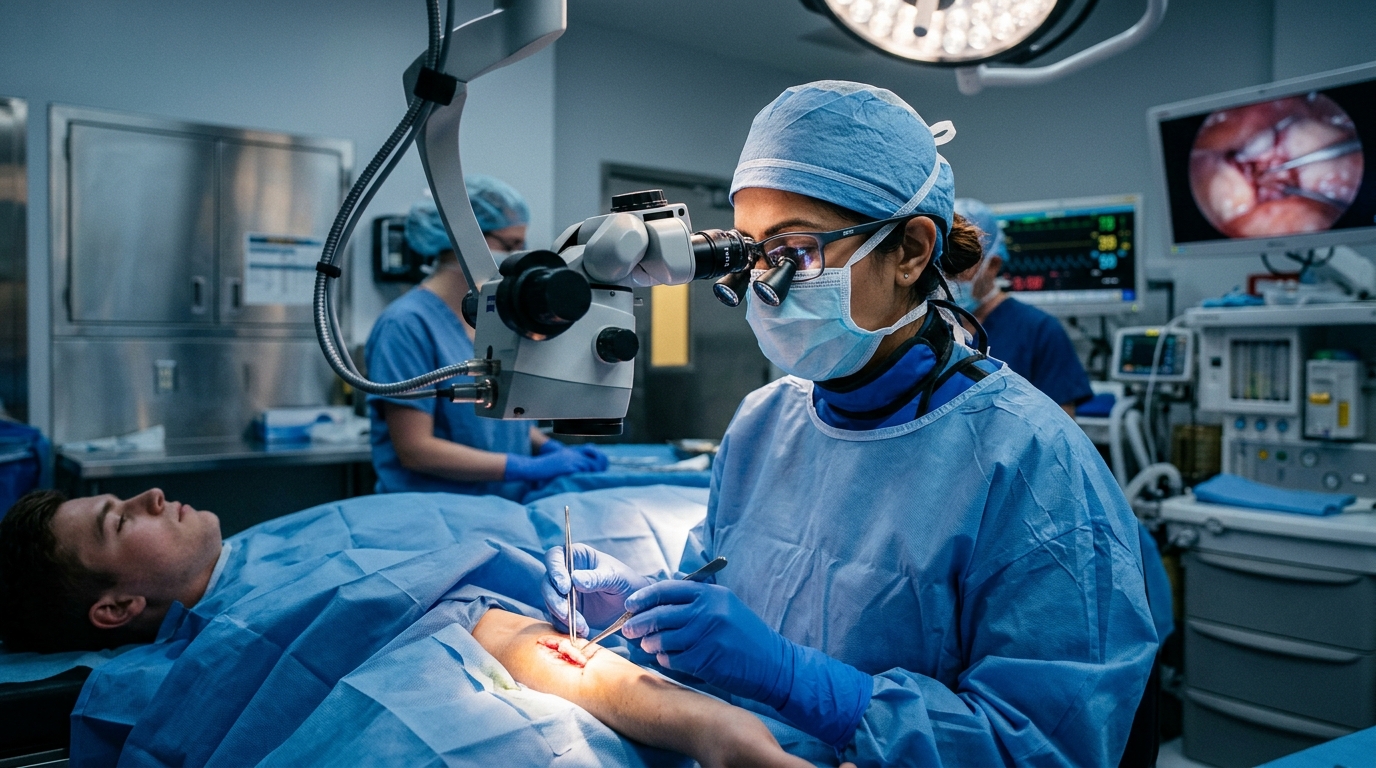
Surgical Approaches & Precision Techniques✦
Anterolateral Thigh (ALT) Free Flap Reconstruction
Super-thin pliable skin and muscle flap for oral cavity, tongue, cheek, and neck defects.
Your Healing Journey & Care Guide✦
A straightforward clinical guide to what to expect and how to care for your results.
ICU Microvascular Monitoring & Perfusion Checks
Dedicated nurse and surgeon monitoring of flap color, capillary refill, and Doppler pulse at Ruby Hall Clinic or Manipal Hospital.
Maintaining optimal hydration, warmth, and blood pressure ensures strong microvascular flow across newly sutured vessels.
Ward Transfer & Early Ambulation
Transferred to regular room. Patients begin walking comfortably. Swelling peaks and starts resolving.
Follow the clinical speech and swallowing rehabilitation exercises diligently to regain oral motor control quickly.
Discharge Home & Oral Diet Progression
Sutures and drains are comfortably removed. Patients transition to soft oral diet and resume home routine.
Continue scar moisturization and keep donor sites clean. Prepare smoothly for any scheduled adjuvant therapies.
Long-Term Functional Rehabilitation & Symmetry
Flap tissue softens and integrates fully. Speech is clear, chewing is stable, and cosmetic symmetry is restored.
Regular follow-up visits ensure oncological safety and optimal long-term functional results.
Recommended Best Practices (Do's)
- Keep the reconstructed area warm and avoid cold ambient drafts during early recovery.
- Follow prescribed oral hygiene protocols, mouth rinses, and wound care diligently after every meal.
- Maintain a high-protein, nutrient-rich diet to accelerate microvascular tissue integration and wound healing.
- Perform daily jaw opening, tongue mobility, and neck stretching exercises as demonstrated by our physiotherapy team.
- Attend scheduled weekly follow-ups with Dr. Gujarathi at Ruby Hall Clinic or Manipal Hospital Kharadi.
Precautions & Safeguards (Don'ts)
- Do not wear tight collars, restrictive clothing, or tight ties around the neck that could compress jugular veins.
- Do not smoke, chew tobacco, or consume alcohol, as nicotine causes vasospasm and threatens microvascular flap viability.
- Do not sleep directly on the reconstructed side or put direct mechanical pressure on the flap.
- Do not consume hard, crunchy, or spicy food until cleared by your speech-swallowing therapist.
- Do not skip scheduled post-operative radiation or oncology consultations if recommended by your tumor board.
Frequently Asked Questions✦
Essential clinical answers on surgical safety, scars, and recovery in Pune.
Schedule Your Consultation with Dr. Chintan Gujarathi
Available for personal clinical consultations and surgical assessment at premier accredited tertiary hospitals in Pune: